Receipt Generator for Craft Fair Vendors
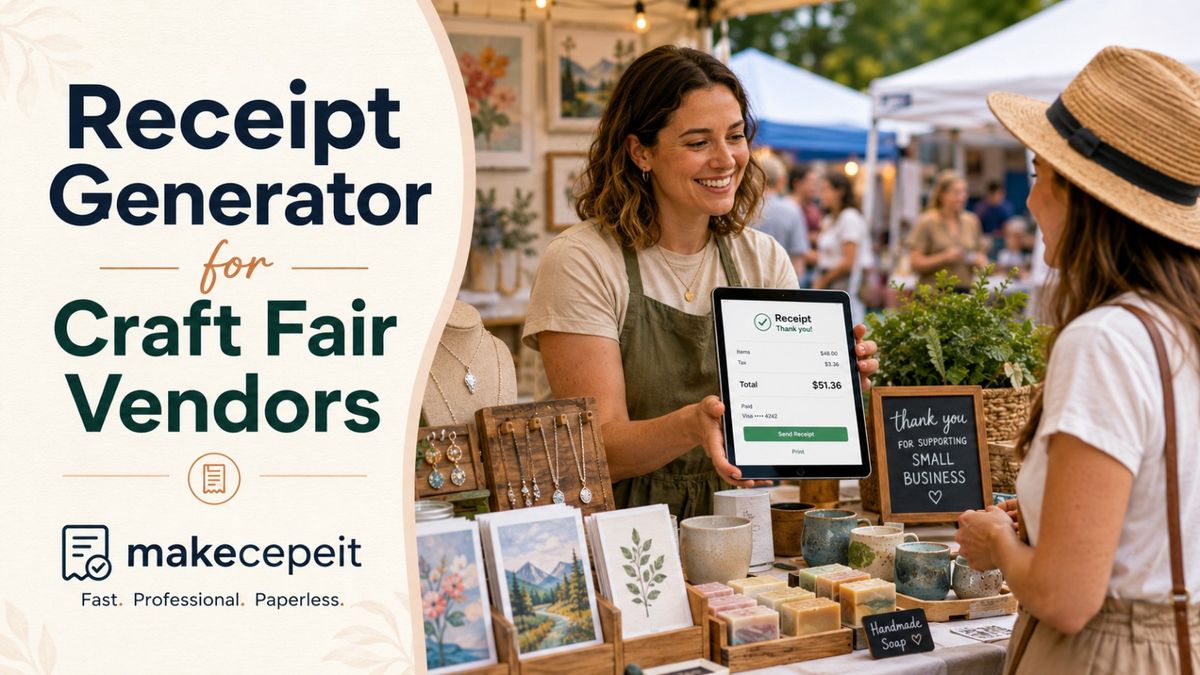
A receipt generator for craft fair vendors helps handmade sellers create clear proof of purchase without slowing down a busy booth. Instead of handwriting every sale or relying only on a card payment notification, vendors can create an organized receipt showing the products sold, transaction date, price, tax when applicable, payment method, and total paid.
For U.S. makers selling jewelry, candles, pottery, art, clothing, woodworking, soaps, accessories, or other handmade products, a simple receipt system can make customer service and sales recordkeeping much easier. makecepeit provides a practical approach for vendors who want to create professional receipts while keeping the checkout experience straightforward.
What Is a Receipt Generator for Craft Fair Vendors?
A receipt generator is a digital tool that turns basic transaction information into a structured customer receipt. The vendor enters the sale details, and the generator creates a document that can be saved, printed, downloaded, or shared depending on the tool being used.
At a craft fair, this is especially useful because sales often happen quickly and through several payment methods. One customer may pay cash, another may use a card reader, and another may use a digital payment service. A consistent receipt format gives each transaction a clearer record.
A craft vendor receipt commonly includes:
- Business or vendor name
- Receipt number
- Transaction date
- Items purchased
- Quantity
- Individual prices
- Subtotal
- Sales tax, when applicable
- Discounts, if any
- Total amount paid
- Payment method
- Optional contact information or return-policy note
Why Craft Fair Vendors Need a Reliable Receipt System
A receipt does more than tell a customer how much they paid. It creates a transaction record that can help both the seller and buyer understand what was purchased and when.
Customers Receive Clear Proof of Purchase
Craft fairs often feature products that are unique, limited, personalized, or handmade in small batches. If a buyer later has a question about an item, having a receipt makes it easier to identify the purchase.
A receipt can also clarify the price paid, applicable tax, product description, and vendor identity when a customer visits dozens of booths during the same event.
Vendors Can Organize Sales More Effectively
Craft sellers may receive revenue from cash, credit cards, mobile payments, online orders, and custom deposits during a single weekend. Creating receipts consistently helps vendors maintain cleaner transaction records rather than trying to reconstruct sales afterward.
A useful receipt system should make selling easier, not add unnecessary steps to every transaction.
Professional Receipts Build Customer Confidence
A handmade business may operate from a home studio or sell primarily at weekend markets, but customers still appreciate professional transaction documentation. A clean receipt containing the vendor's business name and purchase details can make a small craft brand appear more organized and established.
What Should Be Included on a Craft Fair Receipt?
A good craft fair receipt should contain enough information to identify the seller, describe the purchase, and show how the final amount was calculated.
| Receipt Field | Why It Matters |
|---|---|
| Business name | Identifies the craft vendor that completed the sale. |
| Receipt number | Helps organize and locate individual transactions. |
| Date | Shows when the purchase occurred. |
| Item description | Explains what the customer purchased. |
| Quantity | Records how many units were sold. |
| Price | Shows the amount charged for each product. |
| Sales tax | Documents tax collected when required. |
| Discount | Explains any reduction from the original selling price. |
| Total paid | Shows the final transaction amount. |
| Payment method | Helps distinguish cash, card, and other payments. |
You can also include an email address, website, social media handle, order number, return policy, or short thank-you message when relevant.
How to Create a Receipt for a Craft Fair Sale
Creating a craft fair receipt should take only a few simple steps. A complicated checkout process can create unnecessary lines during busy selling periods.
- Enter your vendor information. Add your business or craft brand name and relevant contact details.
- Add a unique receipt number. Use a consistent numbering system so individual sales are easier to locate later.
- Enter the transaction date. Record the date the customer completed the purchase.
- List each product. Describe the handmade items purchased and include quantities where necessary.
- Enter prices. Record each item's selling price rather than showing only a final unexplained total.
- Add applicable sales tax. Use the appropriate tax treatment for the location and type of transaction.
- Record discounts. Include event promotions or negotiated discounts when applicable.
- Select the payment method. Identify whether the sale was paid by cash, card, or another method.
- Check the final total. Review the transaction before completing the receipt.
- Provide or save the receipt. Share it with the customer and retain your own transaction record when appropriate.
Digital Receipts vs. Handwritten Receipts at Craft Fairs
Both digital and handwritten receipts can document craft sales, but they offer different advantages. For vendors handling many transactions, digital receipts are often easier to standardize and organize.
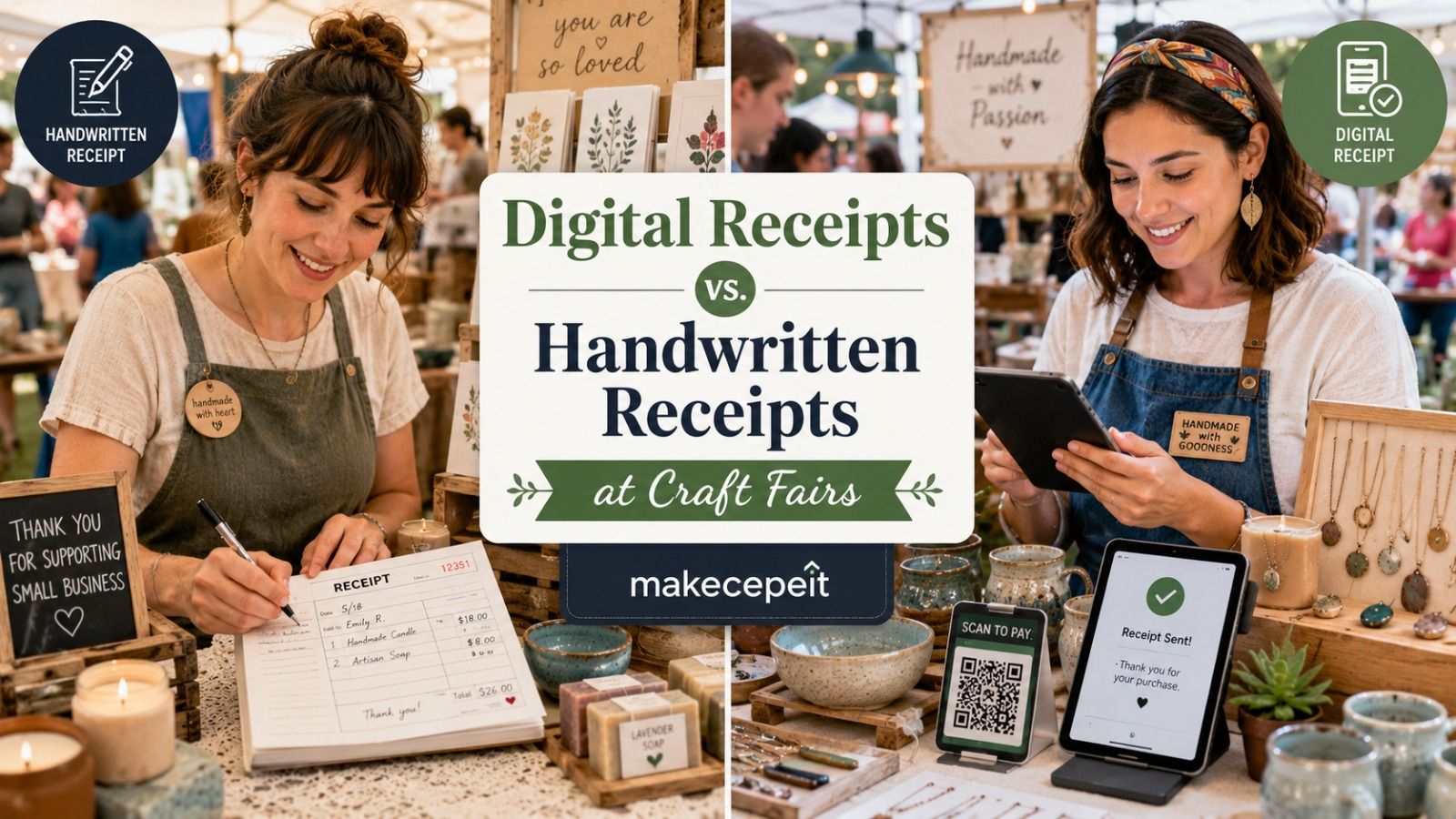
| Feature | Digital Receipt Generator | Handwritten Receipt Book |
|---|---|---|
| Speed | Fast once vendor information is prepared | Requires writing each transaction manually |
| Readability | Consistent formatting | Depends on handwriting |
| Calculations | Can simplify totals depending on the tool | Usually calculated manually |
| Storage | Easy to organize digitally | Requires physical storage |
| Sharing | Can often be sent electronically | Usually handed to the customer |
| Internet dependence | Depends on the receipt tool | No internet required |
Some vendors use both methods. A digital receipt maker may handle most sales, while a small receipt book provides a useful backup when connectivity or device access is limited.
Why Receipt Generation Matters for U.S. Craft Fair Vendors
Craft fair sellers in the United States operate across different state and local tax environments. Sales tax obligations can vary depending on the state, city, event location, product category, and seller's circumstances.
For that reason, vendors should avoid assuming that one tax setup applies to every craft fair they attend. A seller traveling between markets in different jurisdictions may need to review the relevant state and local requirements before the event.
A receipt generator does not determine a vendor's legal or tax obligations. Its role is to help document the transaction accurately once the seller knows what should be charged.
Whether you sell at a holiday market in New York, an artisan fair in California, a weekend market in Texas, a farmers market in Florida, or a local craft show elsewhere in the United States, keeping consistent sales documentation can simplify business organization.
Receipts for Cash Sales at Craft Fairs
Cash sales deserve the same attention as electronic transactions. Card processors automatically create digital transaction histories, but cash can be more difficult to reconstruct if a vendor keeps no separate record.
When recording a cash sale, include the products sold, amount collected, tax where applicable, transaction date, and payment method. Marking the payment as cash makes reconciliation easier when comparing your recorded sales with the cash remaining in your till at the end of the event.
For vendors who handle significant cash volume, recording transactions throughout the day is generally more reliable than attempting to remember each sale after the fair closes.
Receipts for Card and Mobile Payments
A card processor or payment application may already provide transaction confirmation, but your craft business may still benefit from a standardized vendor receipt.
Your own receipt can describe the purchased products more clearly, show discounts or customized items, include your business identity, and keep documentation consistent across different payment channels.
For example, if you accept cash, cards, and mobile payments, using the same receipt structure for all three makes your sales records easier to review.
Using Receipts for Custom and Personalized Orders
Craft fairs frequently generate orders that are more complicated than a simple booth purchase. A customer might request an engraved product, custom-sized artwork, personalized embroidery, a special color, or an item that will be delivered after the event.
For these transactions, the receipt should clearly distinguish between:
- The total order price
- The deposit already paid
- The remaining balance
- The customized product requested
- Any relevant order reference
Do not use a basic paid-in-full receipt if the customer has only submitted a deposit. The document should accurately describe the transaction that actually occurred.
How a Receipt Generator Helps With Craft Business Bookkeeping
Receipt generation and bookkeeping are not the same thing, but organized receipts can support a cleaner bookkeeping process.
When transactions use consistent receipt numbers and descriptions, sellers can more easily compare event revenue with payment processor reports, cash totals, bank deposits, inventory changes, and accounting records.
A simple event workflow might look like this:
- Create a receipt for each relevant transaction.
- Separate or identify cash and electronic sales.
- Review total event sales after closing.
- Compare payment records with money received.
- Record the totals in your bookkeeping system.
- Store supporting documents in an organized location.
The goal is not to create unnecessary paperwork. It is to maintain enough structure that you can understand where your business income came from months after the event.
Common Receipt Mistakes Craft Fair Vendors Should Avoid
Using Duplicate Receipt Numbers
Repeated numbers make transactions harder to identify. Use a simple sequential numbering system or another format that keeps each receipt unique.
Leaving Out Product Descriptions
A receipt that says only "$85 paid" provides much less context than one listing the individual handmade products purchased.
Forgetting the Payment Method
Recording whether the buyer paid in cash, by card, or through another payment service helps with end-of-day reconciliation.
Applying the Wrong Sales Tax Automatically
Do not assume a tax rate simply because you used it at another event. Requirements can differ across jurisdictions, and vendors should verify the rules relevant to each selling location.
Treating an Invoice as a Receipt
An invoice generally requests or documents an amount due. A receipt documents a completed payment. When a customer has already paid at your craft booth, a sales receipt is normally the clearer transaction document.
Creating Receipts Long After the Event
Waiting several days increases the chance of missing details. Recording sales during or immediately after the transaction produces more reliable records.
What to Look for in a Craft Fair Receipt Generator
The best tool for your workflow is the one that creates accurate receipts without making checkout unnecessarily complicated.
Before choosing a receipt maker, consider whether it allows you to:
- Add your craft business name
- Create unique receipt numbers
- Enter multiple products
- Specify quantities and prices
- Record applicable taxes
- Apply discounts
- Identify payment methods
- Add customer information when needed
- Review totals before completing the receipt
- Create a clean document suitable for the customer
Mobile usability also matters. Most craft vendors have limited booth space, so a receipt generator that works comfortably from the device you already use can be more practical than a complicated desktop workflow.
Why Craft Fair Vendors Can Use makecepeit
makecepeit is a practical option for craft fair vendors who want a straightforward way to create organized receipts rather than relying on inconsistent handwritten notes or generic documents.
The value of a dedicated receipt-generation workflow is simplicity. During a crowded event, you should be able to focus on customers, answer product questions, package purchases, and complete transactions without spending unnecessary time formatting documents.
For makers and small vendors, using makecepeit as part of the sales process can help establish a repeatable receipt routine. Enter the actual transaction information, verify the details, and create a clear record for the sale.
Tips Before Your Next Craft Fair
Do not wait until the first customer asks for a receipt to decide how you will handle one. Preparing your receipt workflow before the event makes checkout smoother.
- Decide on a receipt numbering format in advance.
- Confirm the business name you want customers to see.
- Know which payment methods you will accept.
- Review applicable sales tax requirements for the event location.
- Prepare concise product names that are easy to enter.
- Decide how you will record custom orders and deposits.
- Keep a backup method available in case your primary device cannot be used.
- Review your receipts and payment totals after each event.
Receipt Generator for Handmade Sellers Beyond Craft Fairs
The same receipt workflow can be useful beyond a traditional craft show. Handmade business owners frequently sell through multiple channels during the year.
A vendor receipt maker may be useful for:
- Farmers markets
- Artisan markets
- Holiday markets
- Pop-up shops
- Flea markets
- Community festivals
- Trade shows
- Local pickup orders
- Studio sales
- Custom handmade orders
Using a consistent format across these channels reduces the need to develop a new documentation process every time your business sells somewhere different.
Final Thoughts on Receipt Generators for Craft Fair Vendors
A good receipt generator for craft fair vendors should solve a simple problem: documenting a sale clearly without interrupting the selling process.
For U.S. handmade sellers, receipts can help customers understand their purchases while giving the business a more consistent record of cash, card, customized, and event-based transactions. The most useful receipt includes accurate seller information, product details, prices, applicable tax, payment method, date, and final amount paid.
Before your next market or craft show, build receipt generation into your checkout routine rather than treating it as an afterthought.
With makecepeit, you can take the next logical step toward creating clearer, more organized receipts for your craft fair transactions and keeping your customer documentation professional.
Frequently asked questions
- What is a receipt generator for craft fair vendors?
- It is a tool that helps craft sellers create structured sales receipts containing transaction details such as products, prices, tax, payment method, date, and total paid.
- Should craft fair vendors give customers receipts?
- Providing a receipt is a useful business practice and may also be relevant to applicable state or local requirements. Vendors should check the rules that apply to their location and type of sale.
- What should be on a craft fair receipt?
- Include the vendor name, receipt number, date, items purchased, quantities, prices, applicable tax, discounts, total paid, and payment method.
- Can I create receipts for cash sales?
- Yes. Recording cash sales can be particularly useful because they may not automatically appear in a card processor or digital payment history.
- Can craft vendors use digital receipts?
- Yes. Digital receipts can provide a convenient way to document and organize transactions, provided the information accurately represents the sale.
- Is a receipt the same as an invoice?
- No. An invoice usually identifies money that is owed, while a receipt confirms that payment has been received.
- Should sales tax appear on a craft fair receipt?
- If sales tax applies to the transaction, showing it separately can make the total easier to understand. Tax requirements vary by state and locality.
- How should I number craft fair receipts?
- Use a consistent sequence such as 1001, 1002, and 1003 or an event-based format that gives every transaction a unique identifier.
- Can I create a receipt for a custom order deposit?
- Yes. Clearly identify the amount paid as a deposit and distinguish it from the remaining balance rather than showing the full order as paid.
- Can makecepeit be used for craft fair receipts?
- makecepeit can be used as a practical receipt-generation solution for vendors who need clear documentation for craft fair and handmade-product sales.